

Rouge casino Plinko
Introduction
On the Rouge casino Plinko page, that contrast is especially visible. I have reviewed a large number of online casino products over the years, and Plinko remains one of the clearest examples of a game that looks simple on the surface but creates a surprisingly specific player experience. The interface is minimal, the rules are easy to explain in under a minute, yet the actual session can feel tense, fast, uneven and, at times, brutally honest about how chance works.
That is exactly why Plinko keeps attracting attention. It does not hide behind elaborate themes, bonus rounds or cinematic presentation. A ball drops from the top of a peg board, bounces left and right, and eventually lands in a multiplier slot at the bottom. That sounds almost too basic to compete with modern slots or live casino games details titles. In practice, however, Plinko appeals to players who want immediate action, visible randomness and a direct link between stake, risk setting and potential return.
For anyone considering Rouge casino Plinko, the important question is not whether the game is trendy. The real question is what this format actually offers, how its logic works in a real-money session, and whether its rhythm matches the way you prefer to play. That is what I will break down here: the mechanics, the pace, the probability profile, the differences from slots and other casino games, and the practical strengths and weak points that matter before you press launch.
What Plinko is and why it draws so much attention
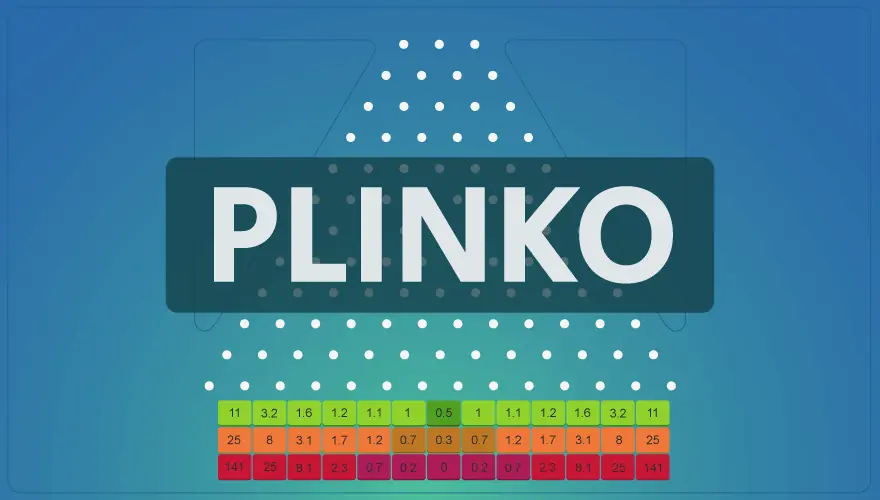
Plinko is a chance-based casino game built around a vertical board filled with pegs. The player chooses a stake, usually selects a risk level and sometimes the number of rows, then releases a ball from the top. As the ball hits the pegs, it changes direction repeatedly until it reaches one of the payout zones at the bottom. Each final slot is tied to a multiplier. Low multipliers tend to sit closer to the centre, while the rare high multipliers are usually placed near the edges.
The reason this format stands out is straightforward: the player can see the randomness unfold. In a slot, the result is produced instantly by the random number generator and then presented through spinning reels. In Plinko, the random process feels physically visible. Even though the underlying outcome is still governed by probability, the journey of the ball creates suspense in a very different way. You are not just waiting for symbols to stop; you are watching the route develop in real time.
That visual transparency is one of the game’s strongest hooks. It gives players the sense that every drop has a story, even though the mathematics remain statistical rather than strategic. I often describe Plinko as a casino title with the body language of a physics toy and the bankroll behaviour of a high-variance betting product. That combination is a major part of its appeal.
Another reason Plinko has become so visible is that it compresses the core gambling experience into a short loop. There is no need to learn paylines, symbol values, side bets or complex bonus structures. A player can understand the basics immediately. But that accessibility should not be confused with softness. Depending on the selected settings, Plinko can move from calm and repetitive to highly aggressive in a matter of seconds.
How the Plinko mechanics actually work in a live session
At a practical level, Rouge casino Plinko revolves around a few key variables: your bet size, the risk level and, where available, the number of rows on the board. These settings shape the payout distribution and the feel of the session far more than many new players expect.
The ball starts at the top and falls through a field of pegs. Each collision sends it left or right. By the time it reaches the bottom, the path has created a final landing position. Most versions are designed so that central slots appear more often than extreme edge slots. That matters because the centre usually carries modest multipliers, while the outer positions can hold much larger returns that occur infrequently.
Risk levels are especially important. In low-risk mode, the multiplier spread is flatter. That usually means more frequent small returns and fewer dramatic outcomes. In high-risk mode, the board becomes more polarized. Small or losing outcomes tend to dominate, but the rare top multipliers become much more attractive. The game itself does not become more complicated, but the emotional texture of the session changes sharply.
Row count, when adjustable, also affects the experience. More rows generally mean a longer path and often a wider distribution of possible outcomes. Fewer rows can produce a tighter, quicker cycle. Players sometimes overlook this setting because the interface still looks simple, yet it can materially affect both pacing and payout behaviour.
| Core setting | What it changes | What it means in practice |
|---|---|---|
| Bet size | The value of every result | Higher stakes amplify both routine losses and rare big hits |
| Risk level | Payout distribution | Low risk feels steadier; high risk creates sharper swings |
| Rows | Path length and outcome spread | Can make sessions feel either tighter or more stretched |
| Auto-play or rapid drops | Session speed | Increases volume quickly and can accelerate bankroll movement |
One detail that deserves attention is that the movement looks organic, almost improvised, but the player should not mistake that for a skill-based system. You are not controlling the ball after release. There is no timing trick that reliably improves results. The visible path adds drama, not influence. That distinction matters because Plinko can feel more interactive than it really is.
Why the game stays engaging and how its pace feels in reality
Plinko holds attention because it compresses suspense into a few seconds. Every drop has a beginning, a visible middle and a decisive end. That structure is powerful. It gives the brain constant micro-resolution: release, bounce, drift, land, repeat. Compared with many slots, there is less visual clutter and less waiting for side features to trigger. The tension arrives immediately.
In my experience, the pace is one of the most misunderstood parts of Plinko. Many players assume a simple screen means a casual session. That is not always true. The speed can be deceptively intense, especially when auto-play is available or when drops are launched in quick succession. Because each round resolves fast, it is easy to cycle through a large number of bets before fully registering what the bankroll is doing.
This is one of the most important practical observations about Rouge casino Plinko: the game can feel light while behaving financially like a high-tempo wagering product. The board looks almost playful, but the session rhythm can be relentless if you do not set boundaries in advance.
A second notable point is that Plinko creates a different kind of anticipation from slots. In a slot, players often chase a feature, a scatter setup or a premium symbol combination. In Plinko, the anticipation is concentrated in trajectory and landing position. The near-miss effect is unusually strong here. When a ball bounces toward a high multiplier and then falls back into a lower slot, the reaction can be immediate and emotional. That does not change the mathematics, but it absolutely changes how the session feels.
A third observation that separates Plinko from typical casino content is how quickly mood can shift after a single result. A long run of modest returns may feel flat, then one edge hit suddenly reframes the entire session. The reverse is also true: a few low outcomes in a row can make a high-risk setup feel harsher than the clean interface suggests.
How risky Plinko really is and which players it suits best
Plinko can range from moderately manageable to very aggressive depending on the settings. It is not enough to say that the game is random. The more useful point is that the distribution of outcomes can be heavily uneven. That is where many players misread the format.
In lower-risk configurations, Plinko may produce a steadier stream of small returns. This does not remove the house edge, but it can smooth the short-term ride. In higher-risk configurations, the game often becomes far more top-heavy. That means many ordinary outcomes clustered at the lower end, with occasional large multipliers carrying much of the appeal. If you choose that route, you are effectively accepting that long dry stretches are part of the design.
For that reason, Plinko tends to suit players who are comfortable with variance and who enjoy direct, repetitive rounds without needing narrative depth or bonus-game progression. It can also work for players who prefer transparent rules over layered slot systems. On the other hand, those who want prolonged entertainment from a single balance, or who dislike abrupt bankroll swings, may find the format tiring.
I would be cautious recommending high-risk Plinko to anyone who equates a simple interface with a forgiving profile. Simplicity of presentation and softness of results are not the same thing. In fact, some Plinko setups are harsher than many mid-volatility slots because the distribution is so concentrated around low-end outcomes.
Plinko may suit you if: you enjoy fast rounds, understand uneven payout curves, and prefer a stripped-back chance game over feature-heavy slot play.
You may prefer another format if: you want strategic input, slower pacing, immersive themes or more structured bonus progression.
What players should understand about probabilities, session flow and outcomes
Before playing Rouge casino Plinko, it helps to think in distributions rather than isolated drops. A single ball can land anywhere within the board’s rules, but the broader pattern matters more than one memorable hit. Most versions are built so that common outcomes gather around the middle, while the largest multipliers sit at the edges and appear much less often.
This creates a classic asymmetry. The result that attracts attention is not the result you should expect regularly. Players often remember the top multiplier because it defines the fantasy of the game, but the practical session is shaped by the ordinary landings that happen far more frequently.
That does not mean large outcomes are irrelevant. They are central to the appeal. But from a bankroll perspective, they function more like occasional spikes than dependable milestones. If you approach Plinko expecting consistent medium returns, you are likely to misjudge the experience.
Another point worth understanding is how session flow changes perception. Because rounds are short, patterns can seem meaningful when they are not. A string of central hits may look like the board is “cooling down.” A few edge drifts may suggest momentum. In reality, Plinko remains a probability-driven product. Players should be careful not to build false narratives around short streaks.
| Session element | Common player impression | More accurate reading |
|---|---|---|
| Several small returns in a row | The board is safe or stable | The distribution may still be heavily weighted against long-term profit |
| Near-hit on a high multiplier | A big result feels close | It is emotionally powerful, but not evidence of a coming edge hit |
| One large multiplier lands | The session has turned favourable | A single spike can distort the perception of overall performance |
| Fast auto-play sequence | Efficient and convenient | Can make losses accumulate before the player reacts |
If there is one practical takeaway here, it is this: Plinko is best approached with a pre-decided stake size and a clear idea of how much variance you are willing to tolerate. Without that discipline, the game’s speed and visual simplicity can encourage decisions that feel casual but carry real financial weight.
How Plinko differs from slots and other casino game formats
The cleanest comparison is with online slots, because that is where many players arrive from. Slots usually rely on reels, symbol combinations, paylines or cluster systems, and bonus structures such as free spins, expanding symbols or multipliers tied to features. Plinko removes almost all of that. There are no themed reels to decode, no feature hunt in the traditional sense, and no layered symbol economy.
That makes Plinko more direct, but also more exposed. A slot can hide its mathematical profile behind animation, sound design and feature pacing. Plinko offers fewer distractions. You see the drop, you see the result, and the cycle repeats. For some players, that honesty is refreshing. For others, it can feel too bare.
Compared with blackjack for UK players, Plinko also occupies a different space. It lacks the decision-making of blackjack, the communal atmosphere of live roulette and the bet-structure depth of baccarat. There is no strategic adaptation during the round. Once the ball is released, the player becomes an observer.
Compared with crash-style products, Plinko shares the appeal of short rounds and visible tension, but the emotional shape is different. Crash games revolve around timing and cash-out decisions. Plinko removes that decision layer and replaces it with a path-watching experience. The suspense comes from direction rather than Rouge Casino withdrawals guide for players comparing casino options timing.
In practical terms, Rouge casino Plinko is closest to a high-clarity chance game with configurable variance. That is its identity. It does not compete with slots by offering more content. It competes by stripping content away and making the random event itself the main attraction.
Practical strengths and weaker points of the Plinko format
Plinko has real strengths, but they need to be described accurately rather than dressed up as marketing claims. Its biggest advantage is readability. A new player can understand the structure quickly. That lowers the barrier to entry and makes it easy to test different settings without learning a complicated ruleset.
Another strong point is immediacy. The game gets to the point fast. If a player wants short, decisive rounds with visible outcomes, Plinko delivers that better than many feature-heavy alternatives. The relationship between configuration and session feel is also clearer than in a lot of slots. Change the risk level and you can often feel the difference almost immediately.
But there are limitations. The first is repetition. Because the core loop is so stripped down, some players will find that the novelty fades quickly. There is only so much variation the peg-board presentation can provide. If you need evolving features, narrative framing or layered progression, Plinko may feel thin after the initial curiosity wears off.
The second limitation is volatility management. That disconnect can catch inexperienced players off guard. Even when the interface looks approachable, the underlying distribution can produce abrupt swings. A board with cheerful motion does not necessarily mean a gentle session.
The third issue is psychological rather than technical. Plinko can encourage over-interpretation. The visible bounce pattern creates the illusion that each route tells you something useful about the next one. In statistical terms, that is usually noise. In emotional terms, it can tempt players into chasing outcomes that remain rare.
Main strengths: quick learning curve, immediate results, clear risk adjustment, strong visual suspense. Anyone stuck on account verification can follow the steps laid out in Rouge Casino Aviator crash game.
- Watch for the house edge stacking up across many quick rounds, since a fast loop can quietly erode a bankroll before a single big multiplier lands.
What to check before launching Rouge casino Plinko
Before starting a session, I recommend focusing on a few practical points rather than diving in because the interface looks harmless. First, check whether the game offers multiple risk levels and row settings. These are not cosmetic options. They define how the session is likely to behave.
Second, look at the multiplier layout on the board. The spread tells you a lot about what the game is asking you to accept. If the top-end numbers are very large, remember that they are usually balanced by a much harsher frequency profile. Big headline multipliers are attractive, but they should be read as rare events, not as realistic expectations.
Third, decide in advance whether you are using manual drops or any form of auto-play. Manual play gives you more time to register the rhythm and emotional pressure of the session. Auto-play may be convenient, but it can turn Plinko into a high-volume cycle very quickly.
Fourth, if a demo mode is available, it is worth using briefly. Not because demo results predict real-money outcomes, but because they help you understand the pace, board layout and emotional feel of different settings. In a game this fast, familiarity with the rhythm is useful.
Finally, set your expectations correctly. Plinko is not a strategy challenge, not a story-led slot substitute and not a guarantee of frequent standout returns. It is a streamlined chance format built around visible randomness and configurable variance. If that is what you want, the game makes sense. If you are looking for sustained feature play or deeper tactical involvement, another format will likely suit you better.
Final verdict
Rouge casino Plinko offers a very specific type of casino experience: fast, transparent, visually simple and often more intense than it first appears. Its core strength lies in how clearly it presents chance. You choose your setup, release the ball and watch the outcome develop in front of you. There is very little padding around the central event, and for many players that directness is exactly the point.
The game works best for people who appreciate short rounds, understand that high multipliers usually come with low frequency, and do not need elaborate features to stay engaged. It is also a strong fit for players who like being able to feel the difference between safer and more aggressive settings without learning a complicated system.
Where caution is needed is equally clear. Plinko can move quickly, and its simple presentation can hide how uneven the result profile may be. High-risk settings, in particular, can produce a rough session even though the board itself looks playful and easygoing. That mismatch between appearance and bankroll behaviour is the single most important thing to understand before playing.
My overall view is that Plinko is worth trying if you want a stripped-back, high-clarity casino format built around visible probability rather than themed complexity. It is not for everyone. Some players will enjoy the tension, rhythm and clean design; others will miss the depth, variety and progression of slots or table games. But if you approach Rouge casino Plinko with realistic expectations and attention to its risk settings, you will understand very quickly whether this style of play genuinely suits you.
FAQ
How does the Plinko round work step by step?
A ball is dropped from the top and travels through the grid of pegs. Every impact changes its path, and it lands into one of the bottom slots that show the multiplier. The result is calculated immediately when the ball finishes.
What multiplier patterns should players expect in Plinko?
Plinko outcomes vary by each landing position, not by the previous round. Multipliers can range from low to high depending on where the ball ends. Higher multipliers are less frequent, so volatility can feel uneven across sessions.
Does Plinko support demo mode, and how is it different from real-money play?
Demo mode lets players try the ball drops and game timing without using funds. Real-money play applies the selected stake to the outcome and records wagering under the casino account. The rules and multipliers follow the same Plinko mechanics, but results affect balances only in real-money.
Where to find the Plinko game lobby inside Rouge?
The Plinko option is available in the games section, then selected from the slots or casino games area. After choosing Plinko, players can start a round right from the game view. Account access is handled through the normal casino login on Rouge.
Is Plinko playable on a mobile phone, and what should be used for the best experience?
Plinko is designed for mobile play through the official casino site on the browser. A mobile casino app may also be available depending on the device, offering a similar game view. For smoother drops, using stable Wi‑Fi or 4G can help.
When switching between app and browser on mobile, does the Plinko session carry over?
Switching devices or browsers can end the current session state for the game view. Returning to Plinko may require selecting the mode and bet again. Checking the selected stake and demo versus real-money mode avoids accidental mismatches.